
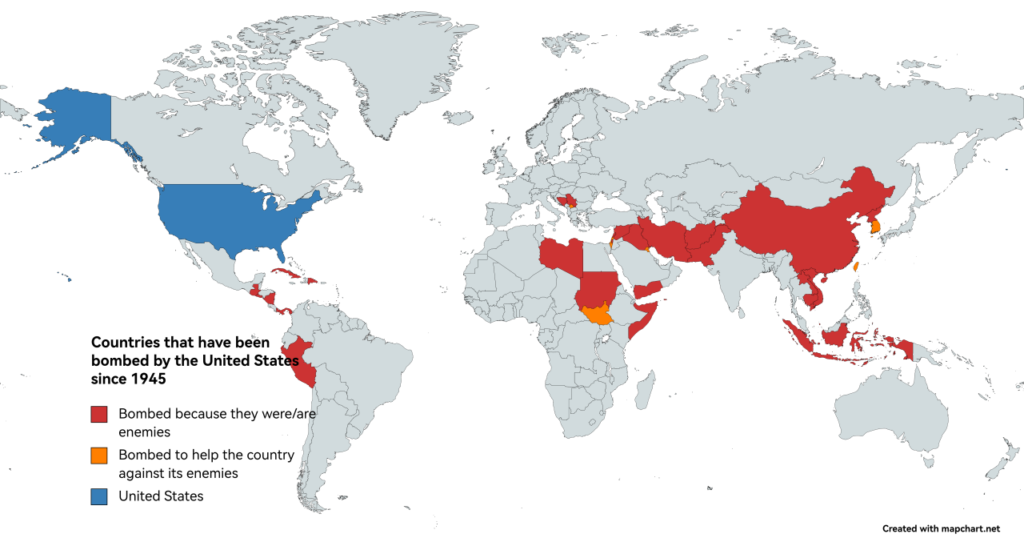
Teaching the next generation can be daunting, but we must do so from a moral standpoint, and more specifically, in the eyes of the oppressed. It was just a normal morning as a first-year teacher, quickly making last-minute copies, when I noticed every teacher printing out patriotic worksheets; I forgot it was 9/11. One teacher offered me her copies where I politely accepted, and walked back into the classroom ready for the day. We gathered around our morning community circle, took attendance, and asked the kids what today was. They began to tell me what they had learned about this day in history, and I was not shocked by the typical narrative (i.e., a terrorist attack) that filled that room from head to toe. I told the class honestly that I forgot it was 9/11 and did not come prepared for one of my lesson plans on teaching truth. I promised them that I would be prepared for tomorrow, but that, for the day, we can remember and honor those who have passed away on 9/11.
I went home quickly to research any articles, lesson plans, and interviews on 9/11 from a non-Western narrative. It was then that I remembered a resource I used in college: Zinn Education Project. The project began in 2008 and, since then, has sparked the interest of students in an honest history that emphasizes the contributions of working people, women, people of color, and organized social movements throughout the world. I found an article/lesson plan called Whose Terror by Bill Bigelow and was impressed by the role students had in the lesson. I decided to email the lesson to my work email so I can make copies in the morning.
My first year teaching Whose Terrorism sparked very real conversations, which began at the community circle where we defined what terrorism was as a collective. One student in particular, who is the next young native Malcolm X, commented along the lines of how what happened to his ancestors was an act of terrorism. I commented, ” Great analysis; can you expand more for the rest of the class?” He took all of us to school, his teacher included. He broke down the histories of broken treaties, stolen land, and stolen children in a way that came not only from his heart but from his ancestors. He said, “genocide is terrorism, and terrorism is genocide”. Throughout his storytelling, he engaged with the classroom and spoke of the atrocities that not only happened to his family but to more than half of the students in the classroom, as the majority of the class were Navajo. In just minutes, a 10-year-old boy exposed the most dangerous terrorist of them all, US. The following year, another student bravely analyzed terrorism with family separation, ICE killings, and deportation all at the hands of the United States government.
Shortly after, we transitioned to the handout titled What is Terrorism? Who are the Terrorists? But instead of handing out a worksheet, I decided to read the prompts aloud, and the community would then move around the classroom to find a partner to then think-pair-share an answer to who the terrorist was in that given situation. We rotated a few times, leaving a couple of prompts unread, as I wanted to make sure I was still delivering developmentally appropriate material with developmentally appropriate language. We gathered back to the community circle to wrap things up with this activity, which was met with some whispers from one student whose family is in the military. This scholar confessed, “These are real stories, and they are about the United States military”. The community agreed, which brought us to almost the end of the lesson; post 9/11.
We began talking about the War on Terror and whether they had ever heard of such a term. My student, whose family is in the military, of course raised their hand, commenting, “We were there for nothing.” This scholar then began to share about the years we had been overseas in other people’s villages, raiding innocent families. Once again, student agency and voice were at the center of this part of the lesson. The War on Terror not only brought death and destruction overseas but also back home in the form of Islamophobia. We watched several interviews of Muslim Americans talking about life after 9/11. We ended the lesson back at the community circle, answering any unanswered questions or any side comments that would like to be brought up. I was scared the night before, thinking about what was going to happen, but what happened was that student voice and ancestral knowledge were shared that day, and that is all I can ask for as a teacher.
What an awesome approach to a tricky subject. You’re a fantastic educator!